A week in Daytona Beach and a month in Daytona Beach are different trips wearing the same swimsuit. A week runs on takeout and a rental car. A month runs on a grocery list, a laundry routine, and a place to sit down and get work done between beach mornings. If you are the kind of traveler who leaves a cold-weather home base for the winter and wants somewhere warm enough to actually live in for a while, Daytona Beach has a real case to make, and a few practical things worth sorting out before you book.
Why Daytona Beach for an Extended Winter Stay
Winters here are mild rather than cold: January runs a 70°F average high and a 49°F average low, and by December the average high is still 71°F. That is comfortable beach-walk weather most days, with layers for the mornings and evenings, not a season you need to plan indoor time around.
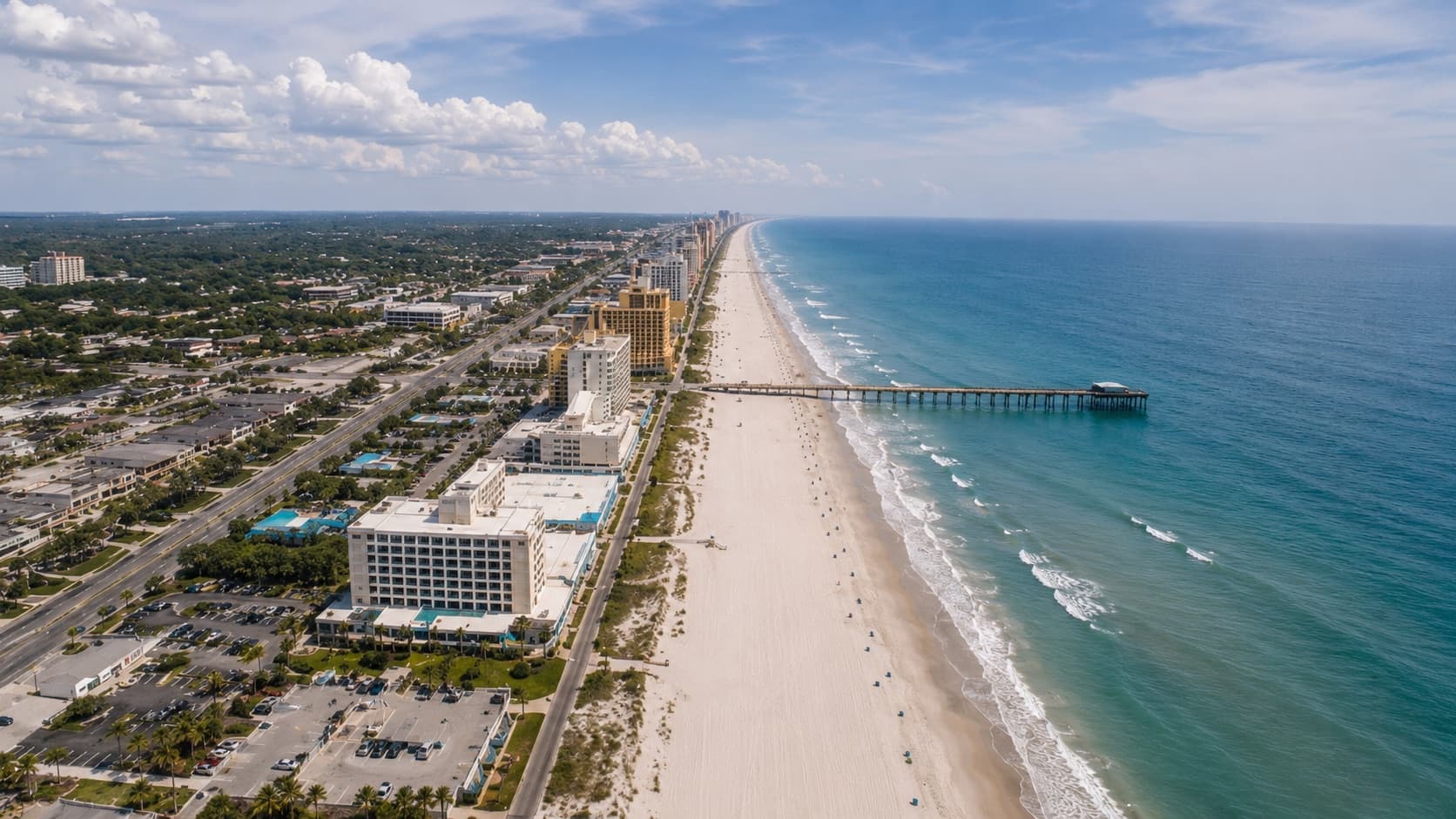
Daytona also gives a snowbird stay something a lot of Florida beach towns do not: twenty-three miles of hard-packed, drive-on sand along the Atlantic, plus a real inland side to the market. Our current Daytona inventory, Palm HAUS, sits on South Ridgewood Avenue near the Halifax riverfront rather than directly on the beach, a short drive from the sand and close to Beach Street dining and the Speedway side of town. For a stay measured in weeks instead of days, that inland position is arguably the better trade: quieter streets, an easier daily grocery run, and beach mornings a short drive away rather than a beachfront premium you pay for every night.
The one thing worth knowing before you pick your exact window: Daytona's calendar is not uniformly quiet in winter. Racing events shape demand and pricing at specific points inside the snowbird season, covered below.
What a Month-Long Stay Needs That a Week Does Not
A few things stop being optional once a trip runs past a week or two:
Laundry you do not have to think about. Palm HAUS units include a washer and dryer in the unit, not a shared machine down the hall. For a month-plus stay, in-unit laundry is the difference between packing light and packing for six weeks.
A kitchen you will actually cook in daily, not just reheat in. Every Palm HAUS unit has a full kitchen. A week of vacation eats out most nights. A month of eating out is expensive and, eventually, exhausting. Groceries close by matter more than almost anything else on this list, and Daytona's inland side is well covered for it: Publix on Beville Road is the closest full-service grocery, about five minutes from Palm HAUS, and Winn-Dixie on Ridgewood is walkable. Target and a Walmart Supercenter are both within roughly five to eight minutes by car for a full stock-up, and Wawa and RaceTrac cover quick coffee and gas runs a few minutes away. We mapped the coffee shops within an easy walk of the building separately in Best Coffee Within Five Minutes of Palm HAUS, and the full local guide covers dining and activities beyond the essentials, filterable by Daytona Beach.
Parking that does not require a plan. Free parking is included as a listed amenity at Palm HAUS. If you are driving down for the season with a car that needs to sit for weeks at a time, not fighting for a spot every day is worth more than it sounds like on paper.
Somewhere to work if you are not fully off the clock. Every unit has WiFi. A lot of snowbird and extended-stay travelers are semi-retired or working remotely for part of the trip, and a kitchen table with a strong connection covers more of that need than people expect before they try it.
A base close to the things you will actually use every week, not just once. Two minutes from Palm HAUS, Halifax Harbor Marina covers sunset cruises and pontoon rentals if being on the water becomes a weekly habit rather than a one-time excursion, and the Main Street Pier and boardwalk are the classic Daytona stroll for an evening that does not require a plan.
None of this is exotic. It is the same list anyone renting month-to-month anywhere would check for. The point is that a proper extended stay needs a property built for daily living, not just a nice place to sleep for a few nights.
The Whole-Building Option for Multi-Couple Groups
Palm HAUS is a four-unit building on South Ridgewood Avenue, and the way it is set up matters if you are traveling as more than one couple or one family. Each of the four units is a 2-bedroom, 1-bath apartment that sleeps six, with its own kitchen and its own bathroom, so a group can book multiple units in the same small building and keep separate space while staying steps from each other. There is also a listing for the building as a whole: all four units together, eight bedrooms and four bathrooms total, with capacity for 24 guests across four kitchens and four living areas. That whole-building shape is a genuinely different option than most single-unit vacation rentals in this market: two or three related couples, a multi-generation family, or a small group booking a winter escape together can take the whole building and still get separate keys and kitchens instead of one shared unit. As of this writing, every Palm HAUS listing, including the whole-building option, is marked coming soon and is not yet open for booking. Check the Daytona Beach market guide or the properties page for the current status before planning around it.
Why Booking Direct Matters More the Longer You Stay
We laid out the actual fee math between booking through a marketplace and booking direct in Direct Booking vs. Airbnb: What You Actually Pay in Fees, using a short stay as the worked example. The mechanism is worth restating here because it does not shrink over a longer trip, it compounds.
Airbnb's guest service fee runs roughly 14.1% to 16.5% of the booking subtotal, and a host running the host-only pricing model instead folds a comparable percentage into the nightly rate before you ever see it. Either way, that cost is a percentage of your total, so a longer stay does not make the percentage smaller, it makes the dollar amount larger. Booking direct removes that percentage entirely: what is left is the property's own itemized nightly rate, cleaning fee, a flat trust and safety fee that does not scale with how long you stay, and applicable local taxes. A flat one-time fee matters less on a four-night trip and matters a lot more on a stay measured in weeks, because it stays the same dollar figure no matter how long you book, while a percentage-based marketplace fee keeps growing with your total. If a monthly stay is on the table, that gap in how the two fee models scale is worth working through with real dates before you commit to either path.
When to Lock In Your Dates
Snowbird season generally means escaping a cold-weather winter, which points toward November through April here. Daytona's own pricing calendar is not flat across that window, and knowing the shape of it matters for anyone planning an extended stay rather than a single week.
November and December read as the calm, lower-demand months of the year, and January carries a shoulder tier with a late-month spike around the Rolex 24 endurance race. From there the calendar tightens: February is a peak month built around the Daytona 500, March is peak for Bike Week, and April carries a high tier through the tail end of spring break season. Event weeks can run at two to three times typical rates and book out months in advance.
The practical takeaway for anyone planning a full winter stay: an arrival in November or December sits inside the market's quietest, most straightforward pricing window, while a stay that runs into February through April will cross into the market's highest-demand stretch of the year. If your dates are flexible, starting earlier in the season and wrapping up before the February surge is the simpler plan. If your stay has to span the racing calendar regardless, lock those dates as early as you can rather than waiting, since the booking widget on any property page always shows the current rate for the exact dates you choose.
Plan Around a Base That Can Actually Hold a Season
An extended stay is a different kind of trip than a weekend, and it deserves a different kind of planning: real groceries nearby, laundry that is not a chore, and a booking path that does not tack a growing percentage fee onto every week you add. Start with the Daytona Beach market guide for the full neighborhood and event picture, browse current properties for what is bookable today, and see the complete fee breakdown in Direct Booking vs. Airbnb before you commit to a season-long stay anywhere.